
Those who have had even a fleeting conversation with me will learn at least one thing (and one thing only): I loathe summer.
Yes, the season everyone else seems to raise like a golden calf with the ability to transmute itself into a well-done steak slathered in A1 is the one I, as a long-suffering Central Pennsylvanian, hate the most.
Heretic! He’s a warlock! BURN THE WARLOCK!
Causing further consternation is the fact that the seasons I do like – fall and winter – seem to have been invaded by unseasonable warmth in recent years (remember when we only didn’t have spring?), thereby truncating the things I enjoy about them – the cool-to-cold air; the scratching of leaves swept along the sidewalk; and the way cold weather naturally sends obnoxious children inside to play.
But I think I have an inside line on what most people who pledge their undying love and devotion to the golden calf of summer are really thinking: 95 degrees with humidity sucks when I’m in sucky Central Pennsylvania! But I like going to the beach for one week out of this smelly armpit of a season, so YAY!
Why not just say, “I love the beach!” instead?
In any case, mine is not to reason why…
Dear villagers – please extinguish your torches, as I come to you on this day not to bash your (allegedly) beloved season, but to recount a story of snowfall that canceled school and introduced me to one of horror cinema’s greatest treasures…
A favorite pastime of my childhood was going to our local Blockbuster Video, where my dad typically allowed me and my brother to rent 2 games/movies apiece. My mom had no interest in movies (unless they starred Harrison Ford), so she usually sat out these weekly pilgrimages.
We alternated between the Blockbusters on East Market Street (where a monolithic Wal-Mart now stands) and Haines Acres (next to Gabriel Brothers). It’s weird to think back to a time when home video was in such demand that York, PA had at least 4 thriving Blockbuster locations.
Snowfall was forecast for the weekend in question, and it delivered, giving our school district just cause to cancel Monday’s classes, and for Blockbuster to give folks an additional day on their rentals (as nobody apparently felt like going out in the developing slushy mess).
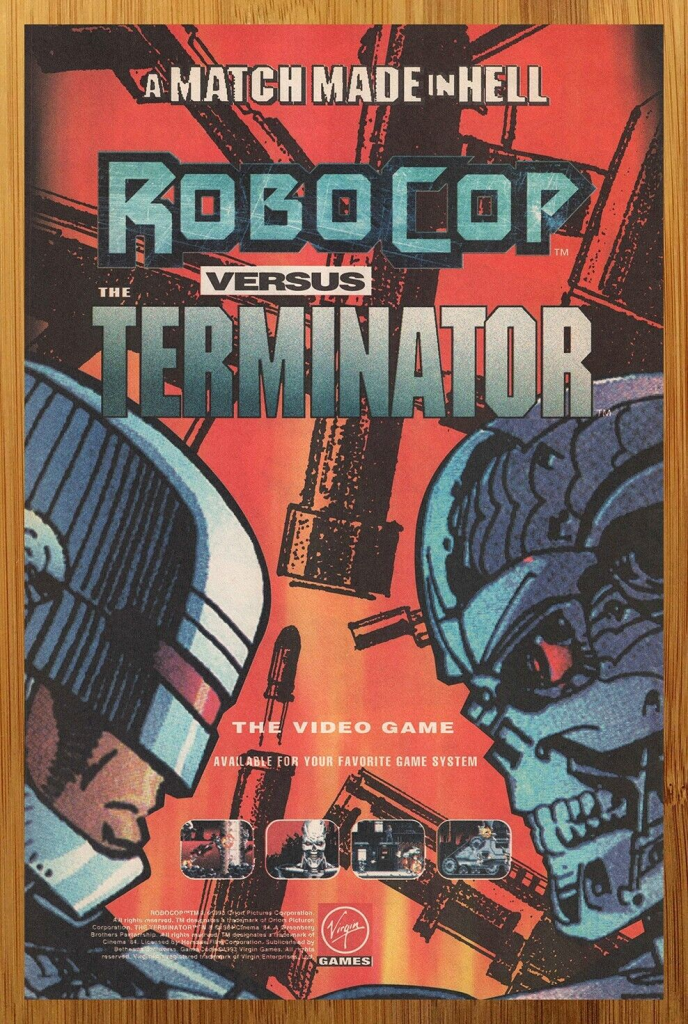
Of course, me and my brother met both of these developments with great enthusiasm, and while I can’t remember what he had rented that weekend, my videogame was Robocop vs. Terminator (for Super Nintendo).
My movie was Carnival of Souls.
I must’ve been 12 at the time, as I owned Roger Ebert’s 1993 Video Home Companion, which included his review of Carnival. So, when I saw our local Blockbuster had a copy – and that the display box carried a “PG” rating (couldn’t rent anything with an “R” at that point) – I picked it up, unsure of what to expect (as was tradition in the pre-Internet-spoiler days).
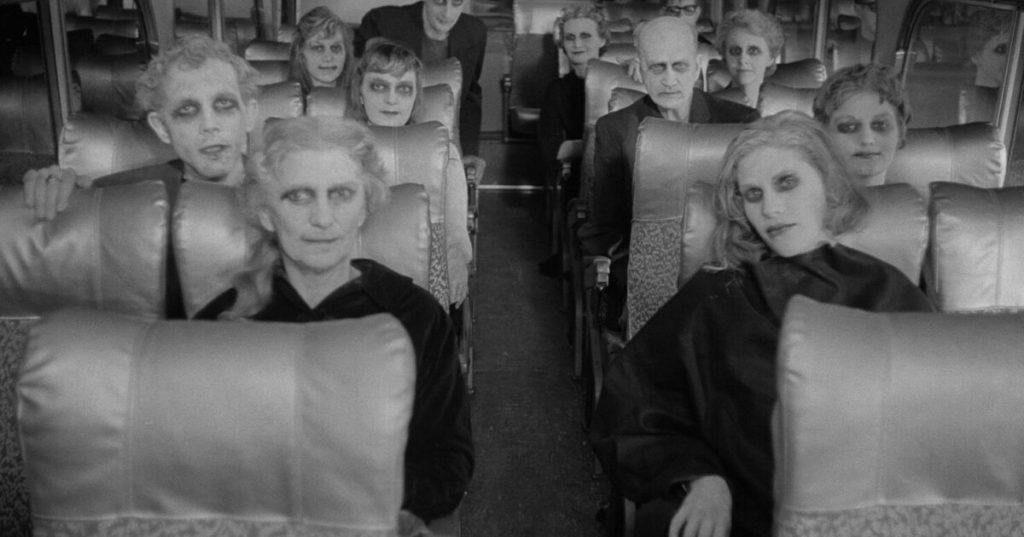
As snow fell outside, I watched a bit of black-and-white brilliance unfold, enveloping me in its eerie spell and leaving me transfixed for 80-some minutes. It might have been the first time I sat up and consciously took notice to atmosphere as a component of horror cinema. I loved the setting of the abandoned Saltair Pavilion (which I later learned had its own eerie, disaster-prone history), which becomes a metaphor for the vacancy and detachment protagonist Mary Henry (Candace Hilligoss) experiences after she’s the only survivor of a car crash. (A similar plot was revisited in Thom Eberhardt’s 1984 sleeper, Sole Survivor.)

In the years that followed, when I began accumulating my own disposable income and well into adulthood, I’ve never been without a copy of Herk Harvey’s 1962 classic (which is available in editions of varying quality, from public-domain budget bins to a formidable Criterion release).
Not that I, in the grand scheme of things, truly need a copy of Carnival. This is a film that leaves an indelible mark with its imagery, mood, and amorphous presentation of a world somewhere between life and death. And, like the best the horror genre has to offer, it reaches beyond baser – and more commercial – instincts to deliver something that, to this day, remains an anomaly.
You like gore? Pffft! Gore is so 1985. Have you ever been freaked out by organ music?
Flash forward to my forty-third year on this sphere, and this once-little Numbling has become jaded to the lure of horror-centric autograph shows (I still attend, but am often more interested in the creativity on display in the vendors’ room) – I went to my first one 20 years ago, when I was somewhat more bright-eyed…and certainly more youthful.
Over the course of these years, the genre’s ascendant popularity – in turn making the horror-convention circuit more lucrative for celebrities – has led to inflated attendance for said cons, thus transforming hotel corridors into miserable sardine-cans of writhing bodies and B.O., and third-rate actors overcharging for selfies and a disinterested scribble masquerading as a signature.
It wasn’t until falling down a Facebook rabbit-hole recently that I made an exciting discovery – Carnival star Hilligoss not only had a social-media presence, but a website where she was selling her memoir (about her tumultuous marriage to actor Nicolas Coster) along with autographed glossy photos of her legendary performance as the ill-fated Mary Henry. As an aside, Hilligoss only appeared in two other feature films – 1964’s The Curse of the Living Corpse, co-starring a young Roy Scheider; and 1971’s South of Hell Mountain (in an uncredited role, per IMDb).
It rejuvenated my excitement for Carnival – not that it had ever waned (maybe “brought out of remission” would be a more appropriate way of putting it?) – and made me think: What celebrity, if they were announced for a convention, would I wait from open to close just for an opportunity to share the same space as them, albeit briefly?
The answer was obvious.
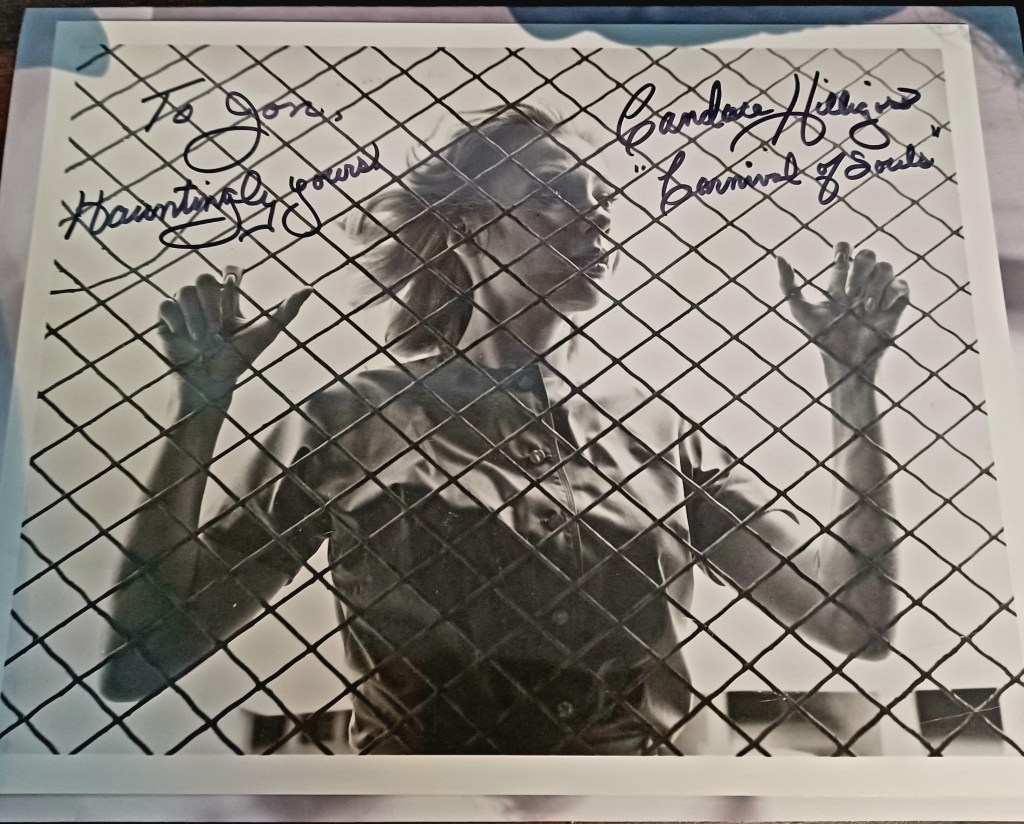
Not only is Carnival a crucial piece of horror-film history – a work that is far from forgotten, even in the “future” of 2024 – but a key component of my formative years and my burgeoning tastes toward cinema in general. Hilligoss’s performance doesn’t carry the movie – rather, it commingles with Gene Moore’s eerie organ score, the off-kilter camera angles, and the Twilight Zone quality of John Clifford’s screenplay (which, incidentally, owes a debt to the TZ episode, “The Hitchhiker”). Mary Henry becomes something far greater than a standard-issue female pawn within a man’s world, and her confusion and disorientation becomes a direct reflection of the viewer’s own experience of watching Carnival, wondering how it will (or will not) come together in the end.
So maybe Harvey’s film also twisted my mind into an existential pretzel that would go on to continually question the facets of human reality, and what constitutes the subjective “normality” we all inhabit.
Therefore…thank you, Herk Harvey, for making this little movie that has come to hold big meaning in my microscopic existence.
Thank you, mom, for buying me Ebert’s book.
Thank you, dad, for taking me to Blockbuster.
And…last but not least, thanks to Eastern York High School for inadvertently creating this memory and keeping it firmly embedded in my mind by canceling school that Monday many years ago.


Leave a comment