
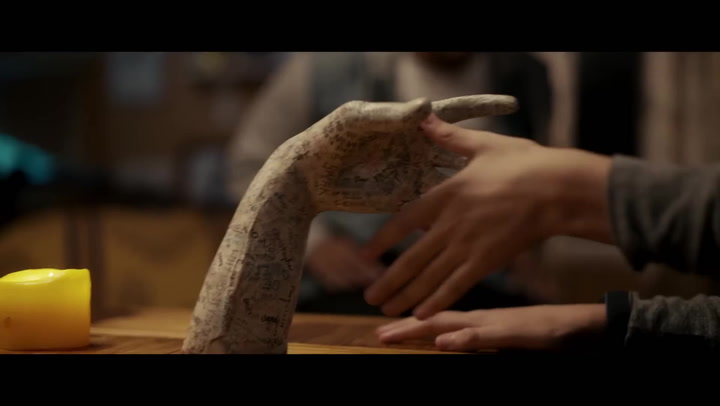
The premise of Talk to Me hinges on a paradox.
Keeping in the spirit of the film, my opinion of it also hinges on a paradox.
But to back up a moment: earlier this year, horror fans were divided on Evil Dead Rise. I thought it injected a dormant franchise with a fresh shot of bloody adrenalin. Others tore the film apart like so much Deadite sinew and bone.
What I liked about Evil Dead Rise was its willingness to go further with a more emotional, character-based approach to the material (something only hinted at in 2013’s Evil Dead). We’ve already seen Bruce Campbell do his Three Stooges shtick over the course of 3 foundational entries – there’s no need to blandly imitate what Sam Raimi conjured all those years ago in terms of screwball, Looney Tunes-style slapstick.
The film felt earnest in its characterization and its emotional stakes, to the point where the systematic destruction of the family unit became mired in tragedy (and, of course, gallons of blood). For me, it’s an exceptional example of a horror film done right in the year 2023.
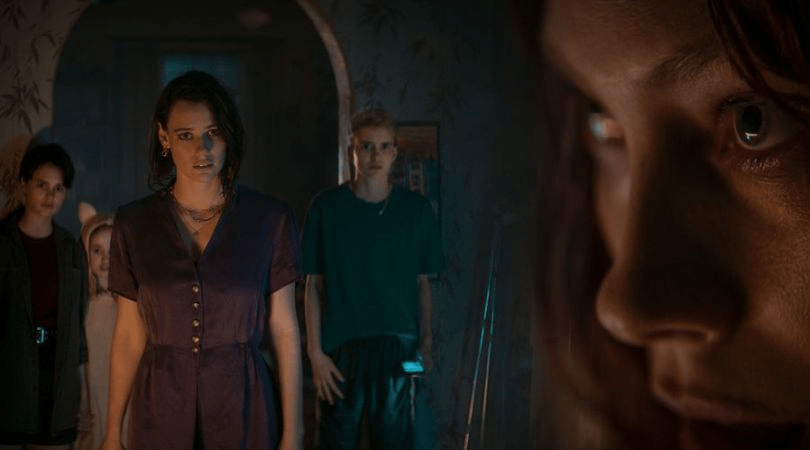
As with most A24 efforts, Talk to Me came to viewers pre-packaged in their standard trailer format: jarring edits and loud noises with hyperbolic critical blurbs (“scariest movie of the year,” because of course it is) tacked on as the 2-minute tease reaches its maddeningly ambiguous crescendo.
Granted, this has less to do with the film proper than my general eye-rolling attitude toward A24’s marketing (after all, this has been their preferred method for over a decade now).
And don’t get me wrong – I am one of those intolerable people who’s a sucker for a good A24 film.
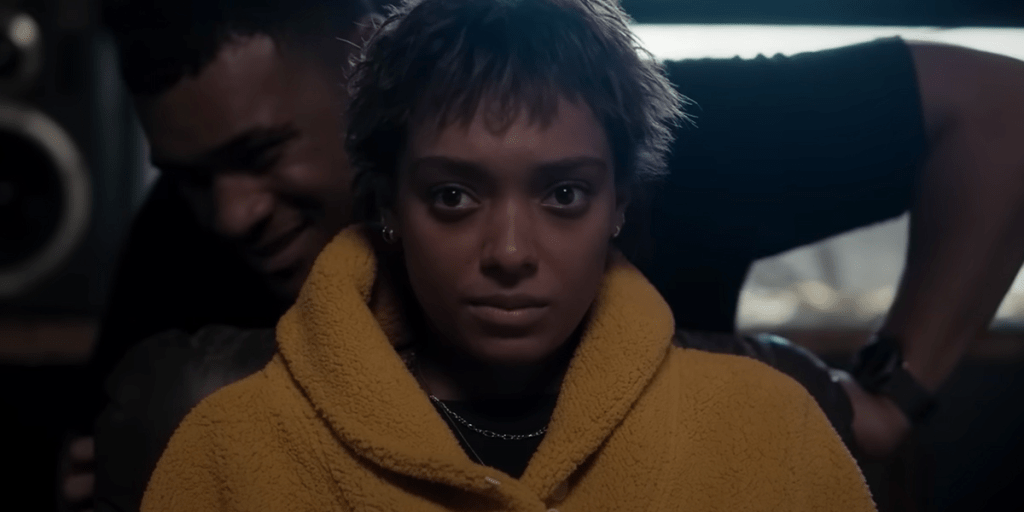
Talk to Me starts with a grabber of an opening that immerses you in a sense of urgency by appearing as one seemingly unbroken take that culminates in two shocking acts of violence. After that, we settle into the story of Mia (Sophie Wilde), who lost her mother under mysterious circumstances two years prior. Her father (Marcus Johnson) is cold and evasive when it comes to talking about it, so she finds refuge with close friend Jade (Alexandra Jensen) and her younger brother, Riley (Joe Bird). That said, she is not invulnerable to the allure of peer pressure and trying to impress Jade’s boyfriend, Daniel (Otis Dhanji), whom she’s been crushing on for a while.
All of the character setup is rather conventional – which is disappointing, given Australia’s fine heritage of genre fare that bucks aesthetic and narrative norms. This is one way in which Talk to Me feels like two hot new filmmakers (Danny and Michael Philippou) making their bid for mainstream acceptance. It’s less about the movie itself than the doors it will inevitably open for the duo. (And hey, I can’t begrudge any young filmmaker that sort of opportunity.)
I did like an early scene that introduces the Ouija-styled conceit that’s making all the schoolkids buzz with excitement: a plaster-covered “hand” that the participant shakes, makes the titular request, and, like a vampire is “invited” into the individual (who, for reasons quickly made clear, needs to be bound tightly to a chair).
The filmmakers make short work of potential narrative tedium: instead of one person experiencing a phenomenon and everyone else being skeptical, there’s a montage where a half-dozen characters subject themselves to the body-warping whims of the hand, making (almost) everyone a “believer” in the process.
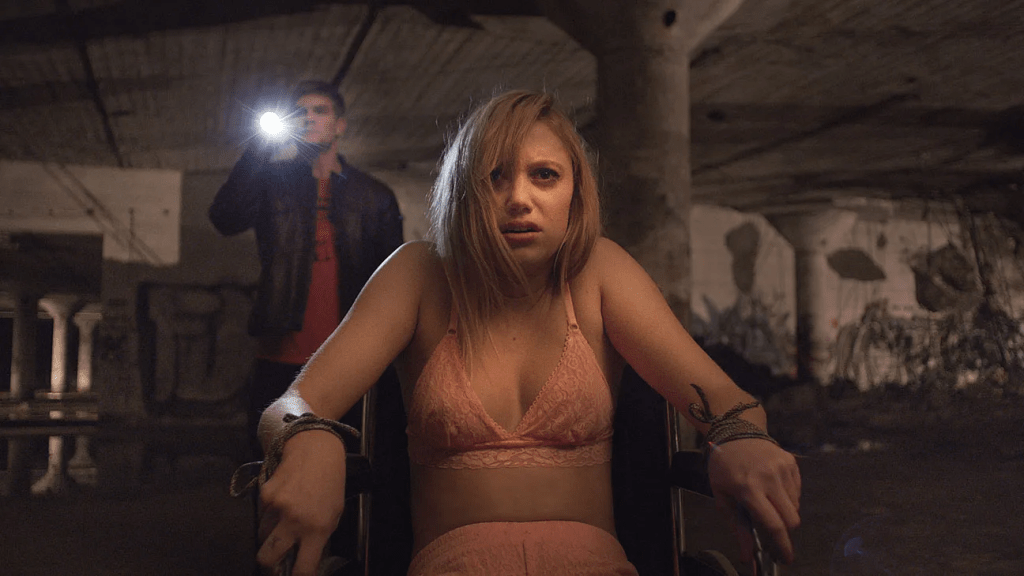
This reminded me a little of It Follows, where the friends and family of Jay (Maika Monroe) believe her story of being infected with a murderous demon-stalker through sexual intercourse because…they’re her friends and family, and clearly care about her. That film also pulled its horror from a more metaphysical and amorphous source.
Talk to Me attempts to make part of the horror an unreliable distortion of everyday reality. After being “infected” during the handshake party gag, Mia begins to have dissociative experiences which prominently feature her deceased mother.
But what’s a dream…what’s reality…and what’s a by-product of the demons tinkering with her vulnerable perception?
I consider myself a fan of horror movies (and movies in general) that plumb the depths of emotional despair that lingers from the loss of a loved one. Oz Perkins’ The Blackcoat’s Daughter (another A24 effort) is a near-flawless example of this of this dramatically tricky subgenre. When done well, straight dramas that confront anguish and frustration can be much more effective than horror films that hinge on boo-scares triggered by loud noises.

My problem with Talk to Me is, its grief doesn’t feel lived-in. I don’t want to assume anything about the writers (Danny Philippou and Bill – not the Graveyard Zombie from Night of the Living Dead – Hinzman) and whatever personal experiences may or may not have inspired this script, but the film overall feels like someone who just watched the hell out of Hereditary and Midsommar, and took their grief-as-catalysts-for-psychological-horror plots as Secret Sauce for a successful contemporary indie horror film.
And while this may be fine for some, I’m of the dissenting critical school of thought that guys like Ari Aster undermine the dramatic weight of their plots by forcing incongruous and straightforward horror tropes into the mix. I found both Hereditary and Midsommar to be frustrating – and more than a little self-indulgent – because of that. Why did Toni Collette’s soul-baring performance in the first act need to result in Exorcist-style spider-walks and cult bullshit in the third?
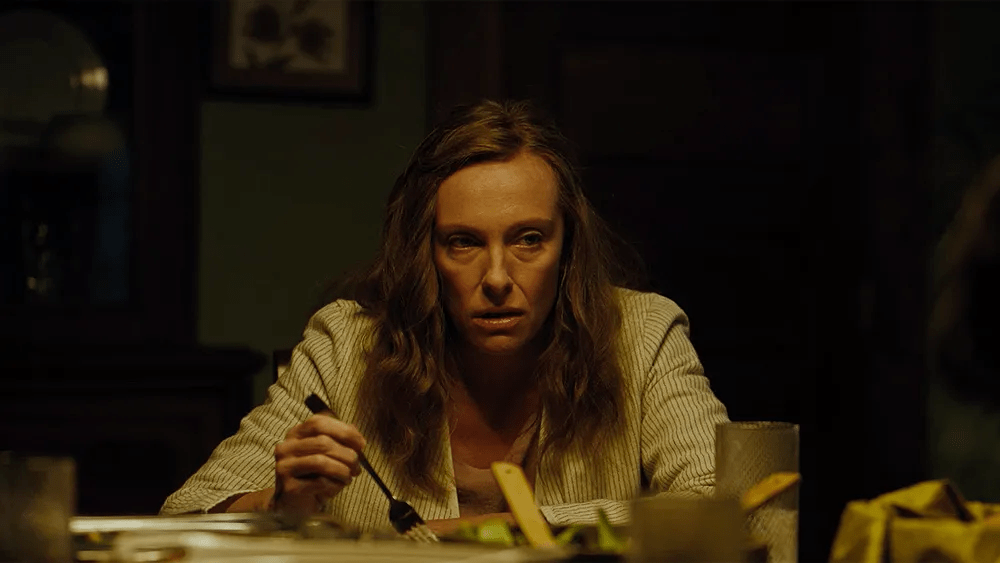
As a result, Talk to Me is failed by its approach almost immediately after the plot kicks into gear (which is a shame, because I spent a good portion of the run time wanting it to succeed), in large part because Mia is a generally unlikable character in the time-honored horror tradition of “fuck around and find out.” The viewer knows the mother-apparition is bad news, but not enough is done to make us fully engage with Mia’s tortured point of view, to the point where we believe what she’s believing (or, in this case, so desperately wants to believe), regardless of the logic at play.
I wondered how the plot would ultimately resolve itself – if resolution is even within the realm of possibility – and the conclusion does rely on Mia acknowledging what a mess she’s made of hers and everyone else’s lives. The figurative damage is hammered home in two particularly brutal scenes of blunt force trauma involving a more likable character. The notion of the body as a physical vessel to allow something evil to thrive is not new, but the Philippous render the physicality of such suffering with more visceral than metaphysical impact.
That’s another aspect of my disappointment with Talk to Me: it does enough things well enough, but arguably doesn’t go far enough. It’s so fixated on being accepted, it forgets to be exceptional. Throughout the experience, I found myself getting increasingly impatient as the filmmakers telegraphed the plot beats (including a non-surprising surprise ending) and kept the marionette strings of their trickery on display for all to see.
This is grief-as-narrative-gimmick in the Aster mold, employed to give the film an emotional resonance it doesn’t earn. At least Evil Dead Rise put in some lifting to earn my sympathy.
2.5 out of 5 stars
 Jonny Numb
Leave a reply to Chris Broadstone Cancel reply