

“When done well, music can crack open the mind.” – Pater Noster
One of the most distinct memories from my childhood – from a budding cinephile perspective, anyway – was my younger brother going off to summer camp for a week, and my father (reluctantly) allowing me to rent Dawn of the Dead from our local Blockbuster when I was 12.
I huddled in front of the living-room TV after my parents went to bed, the volume set to a whisper, and let the brilliance of George Romero’s zombie apocalypse cascade over me like so much slaughterhouse entrails. Of particular note was the early SWAT siege, where a man’s head gets blown apart with a shotgun, sending a geyser of blood, bone, and viscera in all directions. Long after returning the VHS to Blockbuster and even longer until I had the opportunity to view Dawn of the Dead again, I found myself trying, with futility, to recreate that scene in my mind. It lingered because it was one of the most shocking feats of horror FX I’d seen up to that point; some real “holy shit!” stuff.
My father’s decision to let me rent the movie – coupled with having to watch it like an analog-era teenager sneaking a glimpse at scrambled soft-core porn late at night – lent Dawn of the Dead an element of something forbidden…dangerous, even. And that was pretty fucking cool.
Such is the mind of a 12-year old kid who’s yet to pick up on humor, satire, and all the other fun stuff Romero crammed into that film.
But I digress. What the hell does Dawn of the Dead have to do with Pater Noster and the Mission of Light, you might be asking?
Well…I’m now 31 years older than the kid who watched that zombie flick, and a lot of horror movies – great, awful, and all points in-between – have been absorbed into my brainpan over those decades. With increased exposure to any type of art – especially that of a specific genre – one naturally runs the risk of becoming jaded toward the very thing that once inspired shock, surprise, and wonder.
What I’m saying is, Pater Noster does the thing Dawn of the Dead did: it takes a deceptively simple premise and turns it into a full-bore, take-no-prisoners exercise in sheer escalation. The safest genre fare restores order at the end (something Romero himself railed against), while the most daring makes us question how much worse things will get before the credits roll.
And there’s a definite art to this “worst-case scenario” style of storytelling. The most cynical horror filmmakers coast on introducing ugly, hateful characters who exist simply to be dispatched with a graphic gore effect. This is a boring, empty approach to art, as it inspires no feelings except revulsion and disgust. The real challenge is making us give an actual fuck before tearing our hearts out.
Jack-of-all-trades filmmaker Christopher Bickel is much smarter – and certainly more ambitious – than the artless hacks who bow before the body-count altar. While his previous efforts – the violent, psychedelia-tinged road trips of The Theta Girl and Bad Girls – showed the promise of a determined artist, warts and all, Pater Noster takes his craft to the next level [insert some lame joke about hippies, drugs, and “higher consciousness” here].
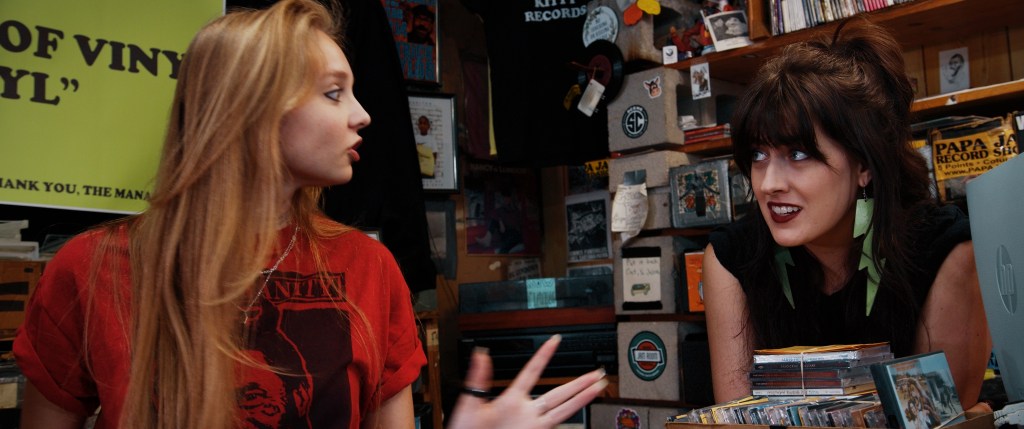
That’s not to say the man has sold out or “gone mainstream,” but one of the pleasures of Pater Noster is the increased polish of the technical elements, the quality of the performances (from our hipster record-store protagonists to the ominously spaced-out members of the titular character’s hippie commune), and the consistency in tone. While it has some comedic asides – especially in the early going – this film is a hungry animal, teeth glistening and ready to tear into the nearest convenient flesh.
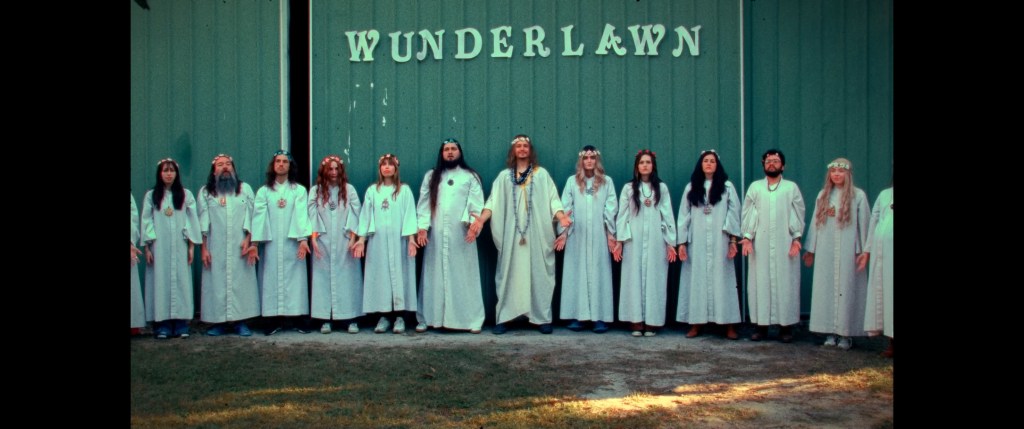
The challenge of any “cult” movie is how convincingly it turns a skeptic into a believer; how well it immerses us in the philosophies and intentions of those keying into a (potentially) transcendental plane of being. We know bad things will happen to our protagonists; the question is, what form will said bad things take? Will we roll our eyes, or will a feeling of unease crawl into our guts and curl up for the long haul?
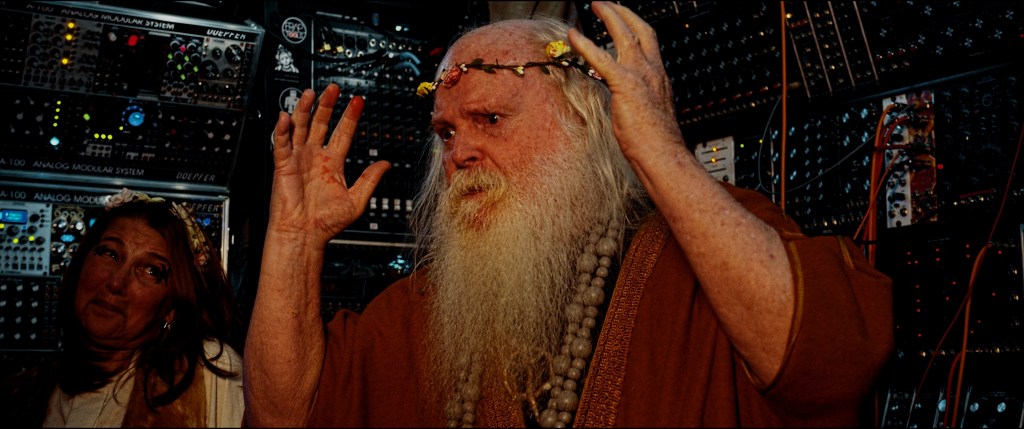
I respect Bickel for filtering the plot through the ever-relatable POV of physical-media collectors (in this case, vinyl enthusiasts): the excitement of seeing and acquiring a “holy grail”…and how said acquisition can fuel an obsession. As someone who genuinely believes in the therapeutic and idea-spawning power of music – and gets irritated when deprived access to it – I also find the statements of Pater Noster (Mike Amason) to be relatable (pretentious, yet relatable…because, let’s face it, we collector types can be insufferable).
In short, that’s how Pater Noster sank its hooks into me. Little did I realize just how tight its hold would be.
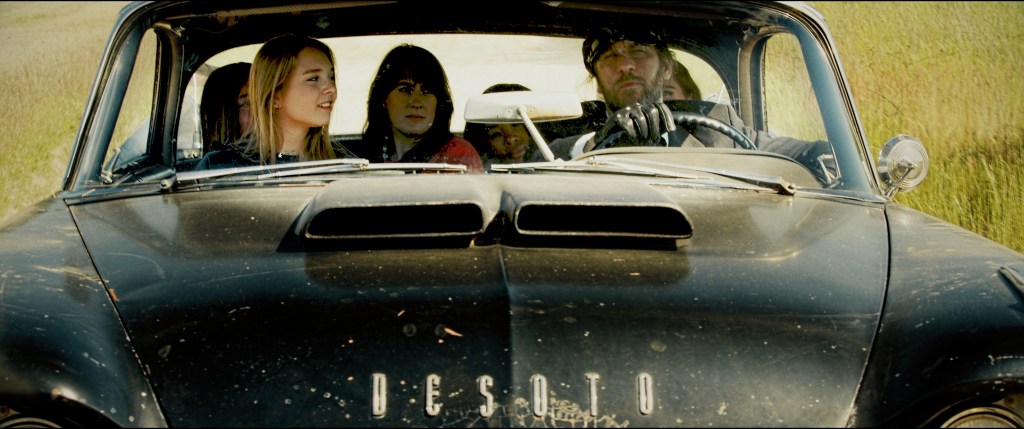
I like how the film spends half its runtime in daylight, imbuing a sense of unassuming “safety” to things. Even when the mysterious Driver (Stephan Jensen) pulls up to take record-store clerk Max (Adara Starr), her roommate Abby (Sanethia Dretch) and co-workers Sam (Morgan Shaley Renew) and Gretchen (Shelby Lois Guinn); and local metal guy Jay Sin (Joshua R. Outzen) to the isolated Wunderlawn commune, I was still in “skeptic” mode. But the commitment to turning each scene of violence and ritual into its own unnerving setpiece builds to something appropriately menacing, with the final 20 minutes descending into the type of jaw-dropping, boundary-pushing horror that made me recoil with the best type of dread-filled excitement. Dialog becomes one with the rhythmic noise of the soundtrack as the primal and the cosmic merge into a cacophony of writhing bodies, geysers of gore, and utter madness.
Seeing is believing, and Pater Noster and the Mission of Light made me a believer.
4 out of 5 stars
(For additional information and to pre-order the Blu-ray, visit: https://www.indiegogo.com/projects/pater-noster-and-the-mission-of-light-horror-film#/)
 Jonny Numb
Leave a comment