
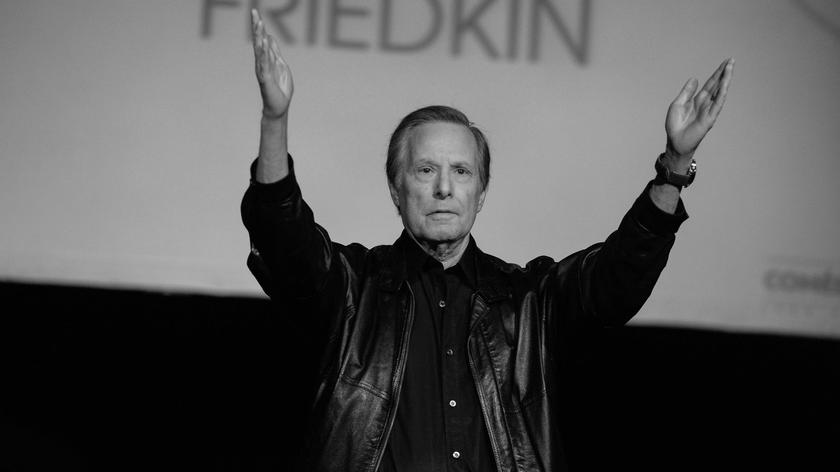
The world lost a larger-than-life artistic voice when veteran director William Friedkin passed away on August 7 at the age of 87. He helped shape various genres of film in ways that reverberate through the movies and TV series of today, and was exploratory in the projects he pursued. Therefore, his filmography is hard to pin down for those (such as myself) who like to analyze directors by the shared thematic threads of their movies. His memoir, The Friedkin Connection, is an excellent recollection of his career, unafraid to take shots at his hubris or artistic miscalculations through the years. His commentary tracks are robust listens, always overflowing with artistic insight. When I first started watching his movies, I often wound up confused at the erratic sine wave that made some better than others; even those I don’t really like (The Hunted springs to mind) still occupy space in my mind, even if just in their blinks of ingenuity. Only in recent years have I come to realize that the thematic variety in Friedkin’s filmography was a feature…not a, um, bug.
So…while I love The Exorcist and The French Connection as much as many cinephiles, you will find neither on this list. Not because I’m trying to be “different,” but because both don’t quite rise to the subjective level of how much I love these other 5 films.
This ranking represents my feelings in order, with #1 being my favorite Friedkin film, indeed.
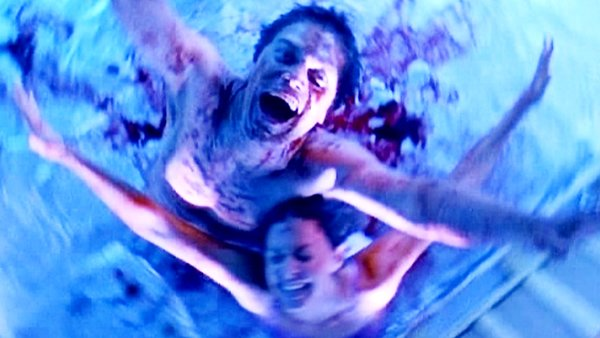
5. Bug (2006)
When I entered the multiplex (yes, Lionsgate daringly gave this a wide release), I knew it wasn’t a film about actual literal creepy crawlies, but the figurative creepy crawlies of loneliness, loss and love that can wield destructive power when brought to a boiling point. In adapting Tracy Letts’ play, Friedkin hits one of my aesthetic sweet spots – a character piece confined to a limited location – and employs every subtle trick in his arsenal to keep things tense and horrifying.
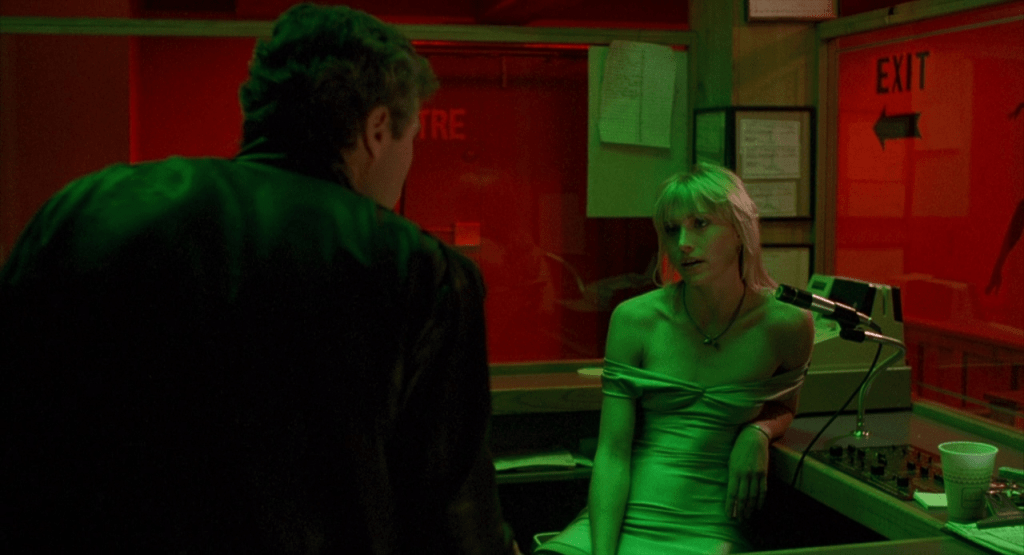
4. To Live and Die in L.A. (1985)
A year before playing Will Graham in Manhunter, William Petersen essayed what could be seen as his corrupt, ego-unhinged doppelganger in this ultraviolent crime flick (which contains one of cinema’s humdinger car chases). Characters have names like “Chance” and “Masters,” if you need an idea of how deeply its pulp roots descend. While I was initially turned off by Petersen’s performance as a cocksure Secret Service agent pursuing a savage counterfeiter (Willem Dafoe, oozing reptilian menace), Friedkin presents his quest for justice – that turns into a quest of vengeance – as a game of Russian Roulette, with each passing sequence bringing our “hero” closer to the loaded chamber.

3. Killer Joe (2011)
For his second-to-last film, Friedkin returned to the Land of Letts for this trailer-park Noir that thrives on double- and triple-crosses, two-time losers who deserve whatever’s coming to them, and a commanding – yet maniacally subtle – performance from Matthew McConaughey as the titular figure: a cop by day, and a killer-for-pay by night. A deadpan dark comedy carried by an excellent ensemble and Friedkin’s full embrace of boundary-pushing wackiness. Additional kudos to the director for refusing to compromise the film’s NC-17 rating.
(Feel free to check out the episode of Movies, Films and Flix where I discuss Killer Joe with the great Mark Hofmeyer!)

2. Cruising (1980)
One of the most beguiling and maddeningly ambiguous films ever made, Cruising explores the true nature of human beings and their identities (sexual and otherwise) as they live, fuck, and die on this spinning sphere. It begins as a rather deceptive police procedural (with a young Al Pacino assigned to investigate the murders of gay men who frequent NYC’s leather scene) before becoming a deep-dive character study where the actual “character” remains vague. Also as vicious and visceral as anything released at the dawn of the slasher era – one can see the clear influence on Lucio Fulci’s The New York Ripper, which came out 2 years later.

1. Sorcerer (1977)
I’m going to heavily disagree with Friedkin on one thing: he blamed the lack of a “star” in the lead as one of the reasons for Sorcerer‘s commercial failure in 1977 (second to Star Wars opening the week after). While Steve McQueen was courted for the role of Jackie Scanlon, he declined and Roy Scheider was tasked with bringing this New Jersey criminal hiding out in South America to gritty life. I’ve always been a Scheider fan, and this role easily conveys his greatest performance, full of sunburnt cynicism and physical and psychological commitment that I frankly couldn’t see McQueen rising to. I think the key to Sorcerer‘s ongoing accumulation of critical and audience respect is its grim, unforgiving scenario (a quartet of international criminal fuck-ups on a nitroglycerin-transporting suicide mission through a jungle hellscape to put out an oil-well fire 200 miles away) which is presented without a hint of glamour or hope. The film’s final minutes are so crushing in their hollow victory, buoyed by Scheider’s world-weary stare, and that’s before Friedkin twists the knife even further once the credits roll. Sorcerer is not just one of the best films of the 1970’s; it’s one of the greatest films ever made, period.
 Jonny Numb
Leave a comment