
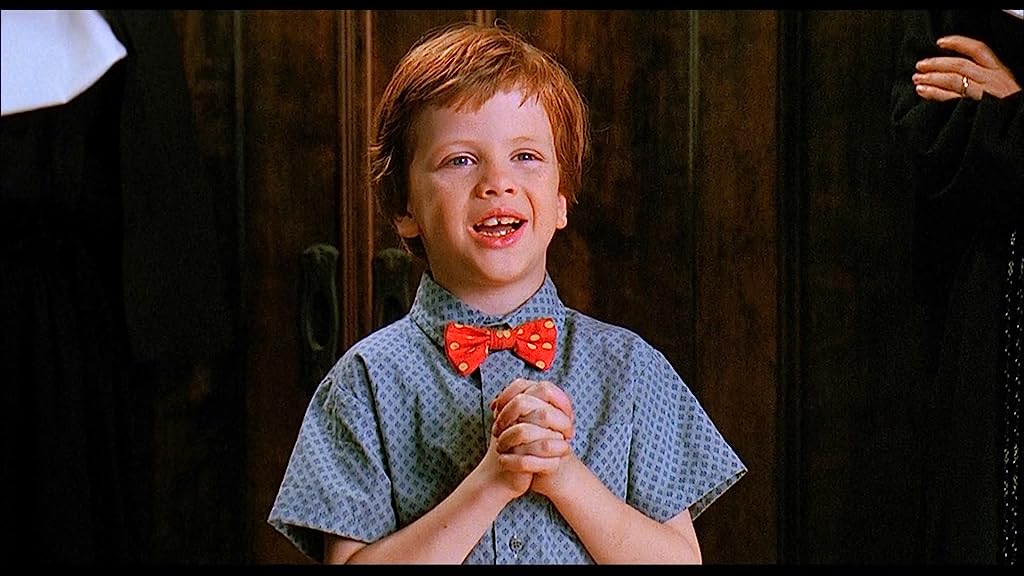
A key memory of Problem Child, which my family saw in the theater in 1990, was my brother’s hesitation toward the material: one of the posters (currently the default image over at the IMDb) featured an artist’s rendering of Junior Healy (Michael Oliver) seated atop a washing machine, with the family cat splayed against the portal window.
Of course, this was back before the MPAA began adding content descriptors to their ratings decisions. For the most part, our parents were left to trust their instincts, along with whatever context they could glean from Siskel & Ebert’s syndicated reviews in our local newspaper.
This makes me wonder how my parents chose this movie. Was it because it was rated “PG” – and ostensibly appropriate for pre-teens? Was it because someone – me, probably – had seen a TV spot and decided it looked like the makings for a fun family outing?

Whatever the case might’ve been, my brother was too young to opt out of the movie, as my parents probably didn’t consider it cost effective to get a babysitter for a 2-hour excursion to the theater.
I remember my mom saying to him, “You don’t have to watch the part where the cat gets put in the washing machine.”
(SPOILER: while there is indeed a cat in Problem Child, and while it is, indeed, subjected to trauma (2 broken legs wrapped in casts, played for laughs), at no point does the cat find itself in a washing machine. And, upon closer inspection of the poster, the cat was in a dryer, not a washing machine.)
That said, Problem Child is loaded with trauma – oppressively so – to the point where it’s rather astonishing it pulled off such trickery under the guise of a PG-rated, “kid from hell” comedy marketed as family viewing. (Wikipedia does offer some insight into the film’s rocky road to theatrical release.)
While I can’t remember my parents’ reaction to the film (maybe it was so traumatic I blocked it out…another subject to explore with my therapist), I remember my 9-year old self being generally amused by the whole thing. Junior is essentially a live-action Bart Simpson – who was under fire at the time for his “bad influence” on the youth of America – and the film itself exists in the same perversely exaggerated and satirical universe as Matt Groening’s signature creation.

With stuff like Problem Child, there’s a wild dichotomy at work, which is a testament to the twisted genius of screenwriting team Scott Alexander and Larry Karaszewski (who penned Problem Child 2 and Ed Wood, among other things). The cartoonish world created by their script (and Dennis Dugan’s direction) is like the deformed offspring of the aesthetic sensibilities of Tim Burton, John Waters, and the Coen Brothers.
The vision of suburbia is punctuated by boorish, sports-fanatic neighbors; selfishly-motivated would-be parents; manipulative and opportunistic local-business owners; cynical civil servants; nightmarish nuns; and – oh yeah – squirrelly serial killers. How did this drum up enough business to spawn two sequels and an animated series?
Problem Child spends much of its 81-minute run time perpetuating an atmosphere of general wrongness. That said, the wrongness stems from those surrounding Junior. The kid may be a hellion, but if children are the products of the world they inhabit, the grownups here are that much worse.
Take, for instance: Ben and Flo Healy (John Ritter and Amy Yasbeck), who, after a cringeworthy appointment with a fertility specialist (that would’ve easily bumped the film up to a PG-13 by today’s standards), find themselves on the road to adoption. While Ben is virtuous and unselfish (Ritter, as always, rises to the occasion in playing an inherently likable guy), Flo is an appalling Wifezilla who looks at children as a means to bump up her social standing with the neighborhood moms.

Meanwhile, “Big” Ben Healy (Jack Warden) is Ben’s cold-hearted father, who runs a successful sports emporium and, in his first appearance, tells his only son he’s being disinherited. He also has ambitions of running for mayor. The façade of his store – featuring the visage of the famous London watchtower – is a delicious visual gag that underlines America’s default tendency to co-opt iconic imagery for our own ends, no matter how little sense the symbolism makes.
Gilbert Gottfried appears as the cynical social worker from the adoption agency, pitched at a level of obnoxious energy that approaches genius (after all, aren’t civil servants supposed to be lazy, lethargic, and otherwise unmotivated sloths (like the actual sloth in Zootopia)?).
The thing with Problem Child is, next to Ben, Junior is the most relatable character. By presenting the grownup world as largely selfish and ignorant, the film sides with the purer and more sympathetic perspectives of this father-son duo (Ben is a never-say-die optimist; Junior is the discarded child who never had a proper chance). Seldom has suburban America seemed as cutthroat and unloving as it does here, which is a rather brilliant coup for such an unassuming bit of seemingly disposable “family entertainment.”
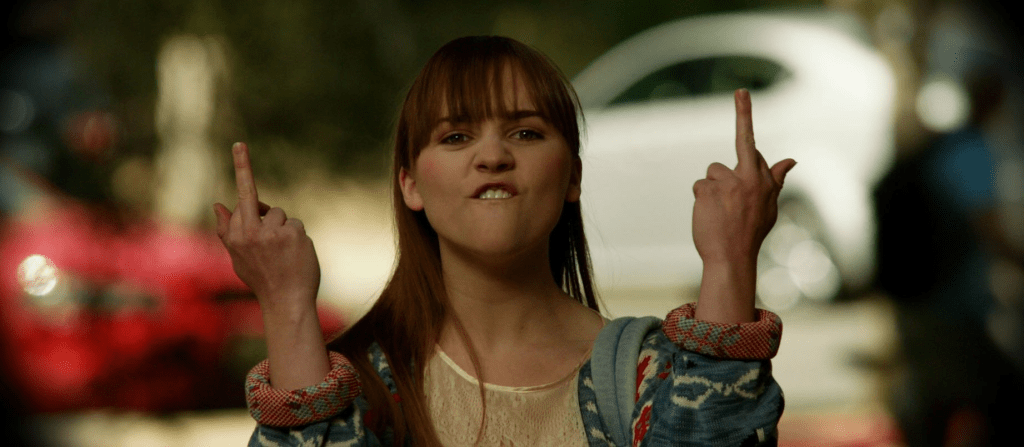
While one could compare Junior Healy to Macaulay Culkin’s serial-killer-in-training in 1993’s The Good Son, the movie Problem Child reminded me most of – in tone and overall spirit – was Bobcat Goldthwait’s God Bless America. There, suicidal divorcee Frank (Joel Murray), disgusted with the callousness of modern America, goes on a shooting spree with disaffected teen Roxy (Tara Lynne Barr). While that film served poetic justice and punchlines through the barrels of its protagonists’ guns, Alexander and Karaszewski find creative ways to tease a sense of morality and irony through the notions of “normality” that have come to define the Status Quo.
And perhaps it speaks to a bit of sympathy on my end that I posit Ben and Junior as the “heroes” of Problem Child. Both are adrift in a world where the words and deeds of others are unfathomable – while Ben sees things through the eyes of grownup bafflement and regret at his life choices, Junior – like Bart Simpson or Calvin from Calvin and Hobbes – is a relative babe in the woods, his acting-according-to-id personality more realistic and honest than the shoehorned maturity most films would employ to ensure a crowd-pleasing ending. And Oliver is nothing short of iconic as the impish Junior, responding to the idiotic, self-absorbed adults around him with mocking humor – a weapon that can burrow under the skin and leave lasting scars.

It’s satisfying to see Big Ben’s Sporting Goods get wrecked by the Bow Tie Killer’s (Michael Richards) getaway car, and there’s something similarly poetic about Big Ben condemning his voter base by getting caught on camera with his pants down (literally). There’s also something fitting about the awful Flo (who, in the inevitable remake, will most definitely be played by Leslie Mann) getting shoved into a suitcase and finding herself staring at pig testicles as the credits roll. I also like how Gottfried’s social worker is brought back for another round of abuse in the sequel.
Maybe most of all, I like the clever juxtaposition of the Bow Tie Killer – a foul, greasy blight on humanity who has no problem bending Flo to his will – against the emotionally weathered Ben, who, through no fault of his own, finds himself in a world that’s dead-set against his wants and needs. Because Ritter is so good at playing the put-upon everyman, there’s a genuine dramatic resonance when, during a quiet aside at a birthday party for a spoiled neighborhood girl, he passes a personal heirloom – a petrified prune – along to his adopted son. It’s exactly the type of ridiculous – yet meaningful – relic that’s akin to the tortured tale of the gold watch Bruce Willis inherits in Pulp Fiction.
In Problem Child, such juxtapositions are par for the course. It may not be a perfect black comedy (or straight horror film, depending on your interpretation), but it was certainly ahead of the curve.
3 out of 5 stars
 Jonny Numb
Leave a comment